

Ursula Franklin: Technology is not neutral.
Every time someone says technology is just a tool and what matters is how it’s used, they’re dodging the question. It’s not a lie. It’s something worse: an incomplete truth that works as a shield. If technology is neutral, no one is responsible for what it does. If use is the only thing that matters, design escapes all criticism. And if design escapes all criticism, we can keep building systems that harm people without anyone having to answer for it.
Ursula Franklin knew this. And she said it with a precision that, fifty years later, is still uncomfortable.


A physicist who asked what engineers didn’t want to ask themselves.
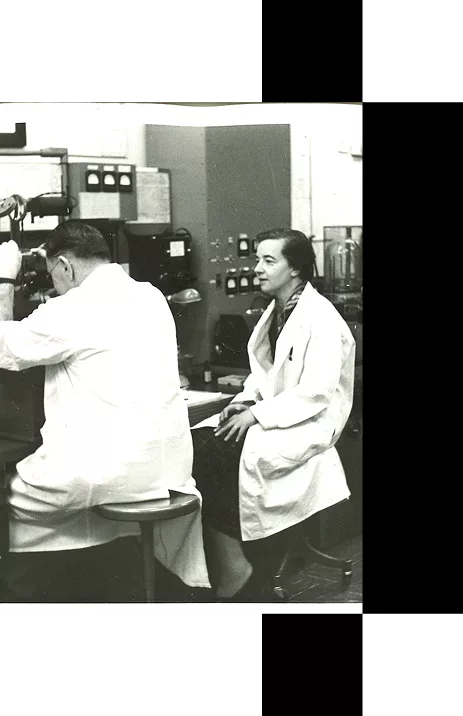
Franklin was born in Munich in 1921, survived a Nazi labor camp, emigrated to Canada, and spent decades at the University of Toronto studying ancient metallurgy and the philosophy of technology. A combination that sounds eccentric until you understand that, for her, there was no separation: how human beings have made things has always been inseparable from how those things have shaped them in turn.
In 1989 she gave a series of lectures for Canada’s CBC that were published as The Real World of Technology. It wasn’t a technical book, or an activist manifesto. It was something stranger: a rigorous, honest analysis of how technology reorganizes power, time, and human relationships, written by someone who had built things with her own hands and had also thought deeply about what building means.
Franklin wasn’t a technophobe. She was something harder to categorize: someone who loved science and deeply distrusted what technology did when left to operate unquestioned.
Prescriptive versus holistic: the distinction that changes everything
Franklin’s most powerful contribution is a distinction that sounds technical and is, in fact, deeply political.
There are holistic technologies: ones in which whoever produces controls the whole process, makes decisions as they go, adapts the method to the material and the context. The craftsperson working clay. The programmer who understands the system they’re building end to end. The doctor who adjusts treatment to the person in front of her, not to the standard protocol.
And there are prescriptive technologies: ones that fragment the process into steps defined in advance, where each person executes a task without seeing the whole, unable to alter the flow, with no judgment of their own over the outcome. The industrial assembly line. The platform worker following instructions from an algorithm they can neither see nor question. The dev team that receives tickets and closes them, one after another, without fully knowing what the thing they’re building is even for. The difference isn’t aesthetic, or a matter of scale. It’s a difference of power: who controls the process? The person doing the work, or the system organizing it?
Franklin pointed out that industrialization wasn’t just a technical shift. It was a massive transfer of control from workers to systems. And that transfer wasn’t accidental or inevitable. It was a decision. Someone designed the factories that way because that design served certain interests. Prescriptive technology doesn’t appear on its own. Someone builds it that way.
What gets lost when design is prescriptive
Franklin documented something anyone who’s worked inside a highly prescriptive system recognizes: the progressive loss of independent judgment.
When the process is fully defined in advance, when the person doing the work has no room to adapt, decide, or question, something happens that goes beyond inefficiency or job dissatisfaction. There’s a systematic erosion of the capacity to judge. The person learns to execute, not to think. Learns to comply, not to understand.
This has consequences the system doesn’t measure, because it has no incentive to. A technical team that only executes specs loses, over time, the ability to detect when a spec is wrong. A developer who doesn’t understand the context of what they’re building can’t anticipate the problems that will surface when that system meets reality. A designer with no control over a product’s fundamental decisions can’t guarantee the product actually serves the person using it.
The system can keep running. Tickets get closed, features get shipped, sprints end. But the work grows progressively more superficial, because the people doing it have lost their close relationship with what they’re building.
Franklin would say this isn’t a problem of motivation or talent. It’s a problem of design. The system was built for people to execute, not to think. And it’s doing exactly what it was designed to do.

Technology that arrives with values already inside it
Franklin’s most enduring provocation is this: there is no such thing as neutral technology.
Every tool, every system, every digital platform embeds, in its very structure, a view of the world. Who has access and who doesn’t. Who decides and who obeys. What gets optimized and what gets discarded. What kind of behavior is made easy, and what kind is made hard.
These aren’t implementation details you can fix later. They’re design decisions made — consciously or not — during construction. And once the system exists, those decisions become invisible, become normalized, get presented as the only possible way of doing things.
It’s what Franklin called the “structuring of time and work”: the way technology doesn’t just do tasks, but reorganizes how we live, how we relate to one another, what we consider possible, and what we stop imagining. A city built for cars isn’t neutral about transportation. A recommendation system built to maximize time-on-platform isn’t neutral about human attention. A work platform built around constant availability isn’t neutral about free time.
Calling this “technological neutrality” isn’t naivety. At best, it’s intellectual comfort. At worst, it’s the perfect alibi for building whatever’s convenient without having to answer for it.


Where CODE comes in
In the industry we work in, the idea that technology is neutral remains extraordinarily useful to those who build without asking for whom.
We start from the opposite principle: everything that’s designed carries values. Every decision made while building a system — what to include, what to leave out, who can use it, how it behaves when it fails, what data it collects and why — is a decision about who holds power and who doesn’t.
That doesn’t mean building well is easy, or that we have all the answers. It means we ask the questions before we start, not after we ship. It means the judgment of the person building doesn’t disappear into the execution of a spec — it stays active through the whole process. It means we treat design as an act with real consequences for real people, not as a sterile technical exercise.
Franklin asked, more than thirty years ago, what kind of technology we want to build, and for whom. It’s a question the industry has spent decades dodging with remarkable efficiency.
We don’t want to dodge it.